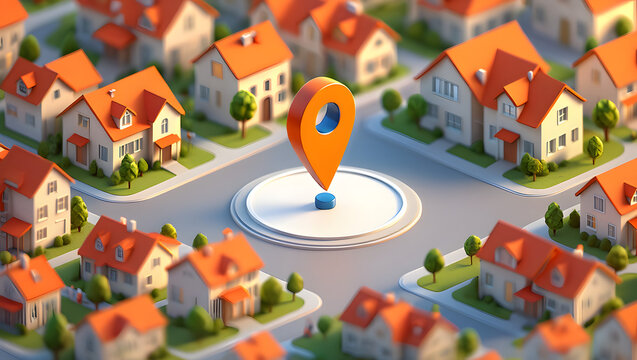
What would be most tempting to believe in today’s highly connected world is that location no longer matters. With virtual workplaces, e-commerce, and smart homes, digital access is normally believed to top physical proximity. Yet, in the world of real estate investment, one truth has endured: location is still the cornerstone of value. Even now, in the digital age defined by convenience and connectivity to modern lifestyles, where a property stands still determines the level of desirability, profitability, and long-term potential it has.
The Timeless Rule of Real Estate
For years, “Location, location, location” has been considered the top rule of real estate. While technology may change how people search and buy properties, it does not change why they decide on locations. The distance to places of work, good schools, health facilities, and areas for recreation remain top selling points. As a matter of fact, both physical and social environments are still closely related to property desirability and cost.
In fact, digital advancements have only made these factors more apparent than ever. Digital maps have made neighborhood information and virtual tours available for instant comparisons, yet the most in-demand homes still keep their spots in vibrant, well-connected locations. The good thing about a great location is that it’s much more than convenience; it’s about lifestyle, security, and long-term value.
Technology Enhances, But Does Not Replace Location
From automated lighting to remote temperature control, smart technology has completely upped the ante of life inside the house. “Smart homes” now offer unparalleled levels of comfort and efficiency. On the other hand, even the most advanced property will fall in value if it so happens to be in a poor location. High-tech features can always be upgraded, but there is one thing that can’t be replaced digitally: a home’s surroundings.
While a smart apartment in a secluded neighborhood can’t compete with a small but less advanced home in a lively, easy-to-reach district, the physical environment of public transport, business centers, and shopping hubs, as well as green areas, still shapes daily life in ways that technology can never substitute.

The Rise of Hybrid Living and Location Flexibility
The pandemic accelerated this culture of working from home and made many rethink where they wanted to live. People began to seek homes away from congested cities toward communities offering lower costs and a greater quality of life. But even this shift proved that location is still central; it’s just that the definition of a “prime” location has changed.
It is where digital connectivity balances harmoniously with lifestyle comfort today. Suburban locations that are reasonably proximate to big metropolitan cities have become very attractive to people who crave space, safety, and the availability of basic amenities with ease. Digital professionals today seek a mix of the best of both worlds in quiet, productive coastal towns, scenic rural communities, and secondary cities.
Developers have moved to adapt and build smart communities: intelligent combinations of technology and convenience. Properties around coworking hubs, high-speed internet infrastructure, or mixed-use developments have greater value in the digitally driven world of 2025.
Investment Viewpoint: Location as a Future-Proof Asset
From an investor’s perspective, location is still the most stable determinant of long-term real estate value. Technology trends come and go, but good locations always appreciate. For precisely the same reasons, properties located near a major growing economic zone, transport networks, or education centers continue to be appealing for investors.
Besides, sustainability and climate resilience are the top emerging location-based factors. Properties located in environmentally stable and well-planned areas will always have an edge over those located in highly catastrophe-prone regions. The digital era has made such information accessible; it thus informs investors in location-based decisions.
Conclusion: Digital Tools, Physical Roots
While the digital age has changed how we buy, sell, and manage real estate, it hasn’t altered why location matters. It makes the process of searching for a property much quicker with virtual tours, AI matching, and online transactions, but the very essence of real estate is physical. Ultimately, technology enhances, not replaces, our understanding and valuation of the importance of location. So as we move deeper into a digital future, one truth continues to stand firm: in real estate, location isn’t just a factor-it’s the very foundation on which enduring value is created.