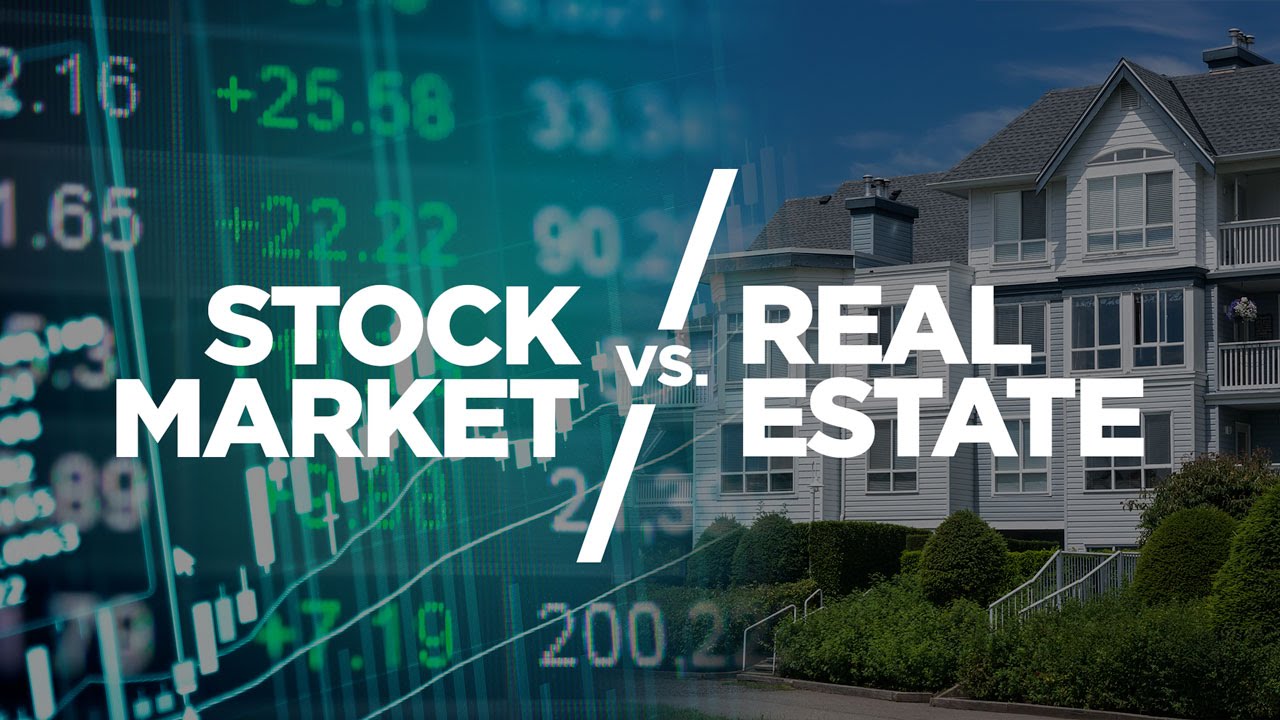
Investing is a key factor in the modern economy. Many have to choose between property and the stock market. However, by 2025, investors are faced with difficult challenges as the structural changes hit the global economy. Each class of assets is associated with its own set of advantages and risks. Both have recently been susceptible to changes owing to technology, inflation, and modifications in consumer behavior.
To the modern investor-our chosen age bracket falls between 20 and 50 years of age-the choice of course would depend upon one’s financial goals, risk tolerance, and how well one understands current market dynamics.
The Case for Real Estate
Real estate has conventionally been one of the best forms of investment owing to a tangible asset with regular rental income, coupled with the potential increase in value over time. In 2025, the strengthening of real estate markets is supported by increasing population growth, urbanization, and the proliferation of smart and sustainable housing developments.
According to the 2025 report by Knight Frank, global property prices are expected to grow at an average of 3-5%, supported by demand in key urban centers and emerging economies. There is growing interest in green buildings and smart homes, which has presented further opportunities to investors keen on innovation and sustainability.
However, real estate investments implicate big capital that combines with other responsibilities, including maintenance, taxes, and a fluctuating market. As financial analyst Barbara Corcoran once said, “Don’t just buy real estate—buy smart. Location, timing, and purpose matter more than price.” Indeed, her advice is still applicable in 2025 since success in property investment requires research, patience, and strategic timing.
The Strength of Stocks
Stocks are not offering such stable returns but promise liquidity, flexibility, and possibly very high returns. Technological innovation has made the stock market more accessible and digitally empowered, even for people who have no more than a smartphone. Online trading platforms and robo-advisors make it very easy for investors today to access their portfolios, track performance, and adjust strategies in real time.
By 2025, artificial intelligence, renewable energy, biotechnology, and fin-tech will be some of the frontrunners in leading the market growth. As investment legend Peter Lynch once said, “Know what you own, and know why you own it.” That is so appropriate today, with more investors than ever asking for transparency and moral alignment with the companies they decide to invest in.
While stocks give higher returns over the short term than property, they are usually much more volatile. Market adjustments, political tensions, and even inflation can drastically affect returns. But for those who take calculated risks, the stock market still remains a viable option in building wealth over a long period.
Comparing the Two
The final decision often depends on what is more needed by the investor when weighing between real estate and stocks, which usually means stability while offering passive income from real estate and potential growth and liquidity from stocks. A balanced investment approach in both real estate and stocks could yield optimal results in 2025.
That means one is safe from the volatility in the markets, assured of steady returns, through diversification between property and equities. Under the “60/40 rule,” explained financial planners, in a quest to strike that balance, 60 percent of the assets are put in the stock market, while 40 percent go into real estate or fixed-income investments.
Expert Commentary: What to Expect
This is further explained by Economist Dr. Mark Zandi of Moody’s Analytics, who said, “Real estate and equities serve different psychological and economic purposes-property provides security, while stocks offer opportunity. The best investors learn to balance both.” For example, in the near term, REITs and tokenized property ownership are part of a new generation of hybrid investment models that will further blur the lines between the two worlds.
Conclusion: Choosing What Fits You Best
Which is a better investment, real estate or stocks? There is no universally accepted answer to this in 2025. It depends on the goals of the investor, the expected timeframe, and his or her risk tolerance. Real estate remains the cornerstone for long-term stability with tangible assets.
For those who need flexibility, scalability, and growth, stocks remain second to none in their potential. The smartest investors will realize that success is going to come not from choosing one over the other but in finding a balance between the two that will help build a financially secure and resilient future.